
CWB Class Action wins another round
 (April 8, 2022) Since the Harper government killed the Canadian Wheat Board (CWB) in 2011-12 the Friends of the Canadian Wheat
Board (FCWB) has contended that the assets of the CWB were wrongly given to G3 Canada Ltd. Remember that G3 is a partnership of the giant multinational Bunge and the Government of Saudi Arabia.
Two years ago, the Manitoba Court of Appeal agreed with the argument that the CWB’s pool accounts held farmers’ money. As a result of that ruling, Justice Martin of the Manitoba Court of Queen’s Bench gave a green light to proceeding with the Class Action against the Government of Canada and G3 Canada Ltd. The Class Action seeks the return of $145 million of farmers’ money and $10 million in punitive damages, plus interest—no small amount by any measure.
It would not have been possible to reach this stage or even begin the legal challenge without the tireless fund raising and commitment of a large network of farmers from across the prairies. The CWB Teddy Bear you see adorning this page was given to the first donors who kicked in money for legal and other fees.
Despite this favourable ruling, it is not the time to rest. Now begins the truly hard work: demanding documents, analysing them, and convincing a Court that former Agriculture Minister Gerry Ritz did commit misfeasance in public office. Will the Government of Canada be transparent and provide documents and testimony in an expeditious fashion or will there be attempts to stonewall, delay, and draw the process out?
Stay tuned.
Disclosure: I have been involved with the Friends of the CWB for almost 20 years.
Here is the news release from the Friends of the Canadian Wheat Board:
Queen’s Bench Justice Martin certifies Wheat Board class action
(Swift Current, April 8, 2022) On April 5, 2022, the Honourable Justice Martin, of the Manitoba Court of Queen’s Bench, certified a Class Action lawsuit brought by Manitoba farmer Andrew Dennis against the Government of Canada and G3 Canada Ltd. The lawsuit alleges financial irregularities occurred during the privatization of the Canadian Wheat Board (CWB).
Mr. Dennis is acting as the representative plaintiff for farmers who sold wheat to the CWB’s pool accounts in the 2010/11 and 2011/12 crop years. The Certification of the Class Action represents the Court’s authorization for Mr. Dennis to move forward with his claim on behalf of farmers.
“We will, at long last, have an opportunity to ask the Court to rule on whether the Government of Canada or Minister Ritz unlawfully manipulated CWB accounts, depriving farmers of money rightfully owing to them,” Mr. Dennis stated.
The lawsuit alleges former Minister of Agriculture Gerry Ritz committed misfeasance in public office by unlawfully sheltering $145,000,000 of farmer’s money into an account that could be transferred to the Wheat Board’s purchasers in connection with the Wheat Board’s 2012 privatization. The Manitoba Court of Appeal accepted in a 2020 ruling that if this money had not been sheltered by the Government, it would have been paid to farmers. The claim also alleges that the CWB is liable to farmers by not paying them the full amount required under their contracts.
“Now that Justice Martin has directed that these questions surrounding the handling of CWB finances must be answered, farmers can expect clear answers from the upcoming court case” remarked Stewart Wells, Chair of the Friends of the Canadian Wheat Board. “We have maintained for over a decade that the Government of Canada and CWB took money that belonged to farmers and sold it as part of the asset base taken over by the Crown and then provided to G3 Canada Ltd. the nominal legal successor to the CWB, and owned by the multinational Bunge and the Government of Saudi Arabia.”
Anders Bruun, one of the lawyers acting on behalf of Mr. Dennis concluded by noting “We are also seeking $10,000,000 in punitive damages plus interest on the full amount claimed for this misallocation of funds. We will be providing full details of this lawsuit and how eligible wheat farmers may benefit in the near future.”
For further information:
Justice Martin’s judgment and other background regarding the class proceeding can be found here:
https://goldblattpartners.com/experience/class-action-cases/post/dennis-v-canada/
Will people continue to pay for big oil’s impunity?
(February 17, 2020) To most prairie grain farmers, the land dispute between a foreign owned fracked-gas company and a First Nation defending their unceded land in British Columbia is remote and may even seem irrelevant.
Via Rail’s suspension of passenger rail service across Canada inconveniencing thousands of commuters in the east was a ridiculous over-reaction to some symbolic blockades – while it likely had most people in the west asking “what passenger rail service?”
As of this writing CN rail has laid off a grand total of ten workers in the Maritimes. So, in spite of some hyperbole by Alberta’s Premier Kenney, the sky is not falling and most farmers will continue paying their bills.
However, there is a large group of Alberta farmers and ranchers to whom the Wet’suwe’ten’s plight is very relevant. With derelict oil and gas facilities littering their land and destroying its value for both farming and re-sale they have been the victims of oil and gas company impunity for decades and may have more sympathy for the Wet’suwe’ten protecting their land than their excitable Premier.
Impunity defined as “exemption or freedom from punishment, harm, or loss”
To understand the impunity of the oil and gas sector it helps to look at Alberta’s history. In 1947 the Government of Alberta, desperate for more oil and gas development, removed the rights of farmers and ranchers to just say no to any oil company that wanted to drill on their land or run a pipeline through it.
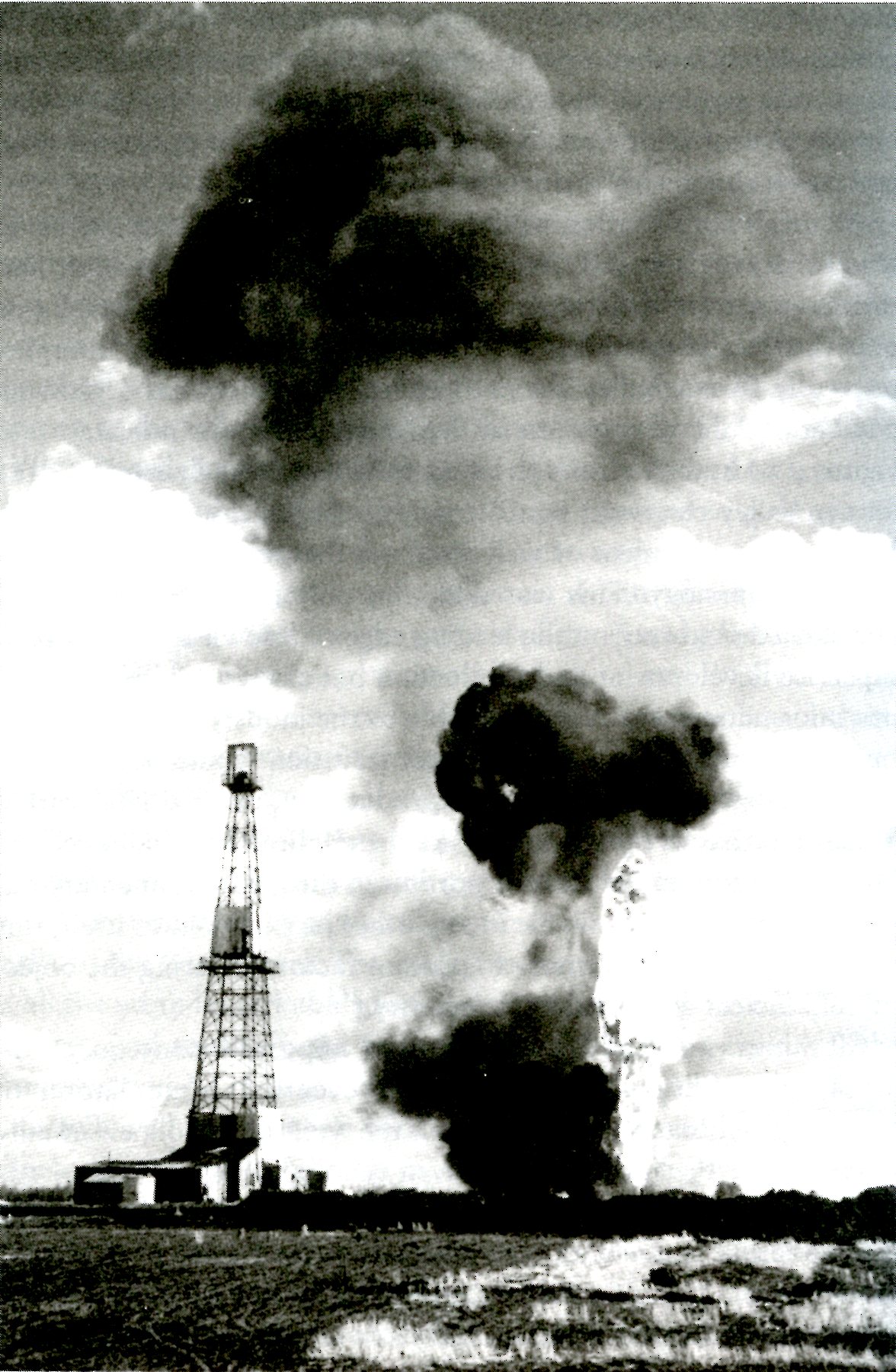
Leduc Blowout – D. Breen, The Conservation Board.
The Government fell for the oil companies’ self-serving argument that they could only drill straight down into oil and gas formations miles below the surface and pipelines could only run in straight lines. In fact, when the Imperial Leduc No. 1 well blew out in 1947, they successfully drilled two directional wells from a mile or more away to intercept the out of control bore hole and stop the flow. So, there was never any technical reason for stripping farmers and ranchers of their right and obligation to protect their land.
The companies simply wanted the power to take surface land from farmers and ranches with no fuss and at little cost. Even then the Alberta government was riddled with conflict of interest, and gave into them. Oil and gas could operate with impunity.
Understanding the System
The way this impunity has worked in Alberta is the company usually makes an insultingly low offer of compensation for access to a location it sees as convenient with the hope the farmer or rancher will respond “that’s not enough.” Under Alberta law, when the farmer or rancher utters words to that effect, the company simply goes to the industry friendly Alberta Surface Rights Board. The Board promptly issues a right of entry order and compensation to the farmer largely based on the agricultural productivity of the land, not its value to the oil company. Then the oil and gas company tears the place up. As a result, Alberta’s regulatory system has “lost the consent of the governed” to quote a retired Alberta Judge who investigated the situation.
Having been connected with two successful court cases against Alberta’s energy regulators, I can say with some confidence the Court system has also been rendered less than useful. This is because in those cases the Government of Alberta changed the laws and regulations with the Responsible Energy Act to negate legal gains made by landowners.
Until oil and gas prices crashed in 2014, it was often not a bad bargain for landowners in lower productivity areas who had no choice in the matter anyway. Those compensation payments financed a lot of new pickups and even the occasional tractor across Alberta. But now the chickens have come home to roost. Bankrupt oil and gas firms washed their hands of clean up costs, then stopped paying landowners and their municipal taxes.
About a year ago, a bureaucrat with the Alberta Energy Regulator estimated the cost of cleaning up the derelict junk on Alberta land at $260 billion. This is more than the Alberta government has saved in oil and gas royalties over the past 46 years and much more than the mere $196 million some estimate the Alberta government holds in security. Maybe that explains why Alberta’s Premier Kenney is asking Ottawa to fund the clean up. The AER bureaucrat was fired.
In the short term the protests supporting the Wet’suwe’ten are unlikely to seriously affect export grain shipments but it may provide the grain companies with a ready excuse to pay farmers less. However, many Alberta farmers and ranchers should have a great deal of sympathy for First Nations facing the impunity of the oil and gas sector enabled by Canada’s industry-captured regulatory system.
The National Farmers Union is to be commended for supporting the defense of renewable land and water against this non-renewable sun-set industry. Here is a link to the NFU news release and here is a link to a background article from a western Canadian historian.
Prairie farmers should support CN rail workers
Calls to force CN rail workers back to work bring into question Alberta’s “ethical oil” stance and the reputation of prairie grain
(November 20, 2019) Both the government of Alberta and the usual suspects in the Astroturf Prairie agricultural groups are telling Ottawa to legislate an end to the CN rail workers’ strike. Most people may not know the strike is over some exceedingly unsafe working conditions being imposed on workers.
For prairie grain farmers this year has been, to quote the Canadian author Hugh Garner, “one damn thing after another” finally ending in one of the worst harvests in years.
So it is no surprise the prospect of a rail interruption is not welcomed in the farm community. However, farmers should not welcome legislation forcing rail workers back into unsafe conditions either. Farmers know that safe working conditions are important in their operations so it is only ethical to support safe working conditions for others including the striking CN workers.
Although people can argue about if Alberta oil is ethically produced, there can be no argument that prairie farmers produce high quality grain. It would be a shame to have that international reputation tarnished with rail accidents or with the deaths of rail workers forced to work in unsafe conditions.
Just as the Canadian diamond mining industry is careful to make the distinction between their “Polar bear” diamonds and “blood diamonds,” grain farmers and the agricultural Astroturf organizations should be careful with their rhetoric, lest our grain comes to be seen as “blood grain.” As farmers we must respect the people who move our product to market and support their right to safe working conditions.
Chinese canola embargo about quality assurance

Canola experts – may not be exactly as illustrated
(March 23, 2019) This morning CBC is reporting that China stopped all purchases of canola from Canadian sources. In spite of what Harper era diplomats with short memories and some other commentators may say, this is about the customer, in this case China, not getting the product they want.
The canola issue is rooted in concerns about dockage and trust that go back almost three years. As this writer said at the time, most of the canola off prairie farms already meets the one percent dockage standard China wants. Following monumentally short sighted advice from private sector insiders and the industry-captured Canola Council of Canada, Prime Minister Trudeau insulted his Chinese hosts on this subject during his last visit by insisting on the 2.5% standard.
Back in the days when the Canadian Wheat Board still existed it maintained a full office and staff in Beijing. The CWB won China’s respect and trust in the 1950s for defying the American food embargo by selling Canadian wheat and barley to a starving China. Over the years, CWB staff often went to bat for Canadian companies having difficulties in China and around Asia. Those Canadian companies effectively free-loaded on the good will generated by the Wheat Board. Harper killed all that.
When the Harper administration was burning down the CWB and research libraries, this writer and many others pointed out the CWB was a valuable and credible advocate for Canadian grain farmers. The people on the Canola commissions loudly proclaimed they could easily do the same job. Events have now demonstrated they can’t.
All they managed to do during Trudeau’s last visit to China was goad him into insulting the Chinese while taking the side of the much disliked American grain companies. Out of respect the Chinese let Trudeau save face by kicking the can down the road. Today that can landed with a thud heard across prairie Canada. When he got home Trudeau added insult to injury by appointing a former executive from one of the big American grain companies to head the critical Canadian Grain Commission.
As was said here, “the canola council can’t” and farmers with canola in their bins that is suddenly worth a lot less money today than it was yesterday should demand their check-off money back from the Canola commissions they finance. After all, farmers will need the money and the commissions have done them no favours.
The best the Canola Council can now come up with is the nonsense that Europe will step up as an alternative market. Sure, once that market sees genetically modified crops and the glyphosate they depend on as selling points. Good luck with that. In the meantime, farmers better start hoping Trudeau stops taking bad advice on China and canola.
Will farmers share in Dreyfus win over railway?
(February 4, 2019) A couple of weeks ago there was a small news story about Louis Dreyfus successfully suing CN rail for failing to provide enough grain cars to its elevators.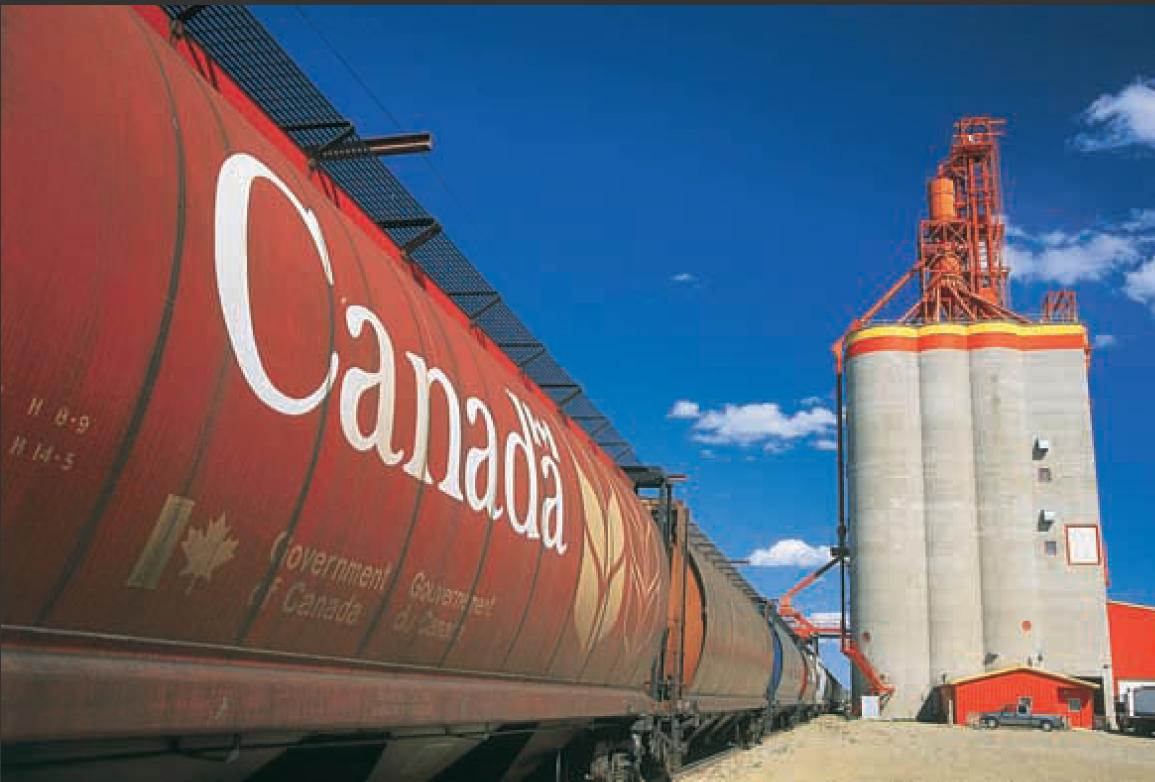
CN trotted out the usual excuses for being tardy: it gets cold in the winter, there was a lot of grain to ship, and they have other customers. It must be easy being a railway lawyer when it is just cut and paste from the same old song books.
Although no money was mentioned in the reports, some farmers may be waiting for a cheque, since in the end weren’t they the ones who lost money if grain shipments were tardy?
Well, not so fast. This is not 1997/98 when the newly elected farmer-Directors to the Canadian Wheat Board launched level of service complaints against both railways for poor service, took them to court, and won. That railway glitch cost farmers and the CWB some $18.7 million in demurrage charges from ships waiting for grain as well as other costs.
As the sole agent for prairie wheat and barley sales the courts recognized the CWB was a “shipper” who had every right to launch level of service complaints with the Canadian Transportation Agency and sue the railways for damages in civil court. Over much disapproving clucking from the usual anti-Wheat Board astro-turf farm groups and others, the CWB’s directors did just that. They recovered some $15 million from CP rail. CN sensibly threw in the towel and made an undisclosed settlement. This money went back to farmers through the Pool accounts.
On $4.5 billion in annual sales at the time, it was not a big amount, but still more than farmers will likely get from this latest tussle between Dreyfus and CN for the simple reason farmers are no longer “shippers.” That power now goes to the new middle men (and a very astute woman in the case of Louis Dreyfus Company) of the giant grain companies who have taken over after the killing of the Wheat Board.
Through their Wheat Board, farmers won big both financially and legally from both the CTA and court processes. And farmers got a cheque too. But the bigger win happened the next crop year and the next and every crop year after that. The Wheat Board never paid net demurrage to ships waiting for tardy trains again. In fact, over the next 13 crop years ship owners paid the CWB and prairie farmers just under $44 million dollars in “despatch” for getting the ships under sail ahead of time, very much enhancing our reputation as reliable suppliers of high-quality wheat and barley.
Farmers delivering to Dreyfus elevators may or may not see some benefits in the form of faster grain shipments, and we may never know how much money Dreyfus won. However, only the most optimistic farmer will expect to see any extra money on their grain cheques in the future. After all, grain marketing is now a private club between the big grain companies, the railways, and foreign grain buyers. Even though prairie farmers take all the risks of growing a crop and delivering it, they will never get a look behind the curtain.
If they are expecting some money out of the Dreyfus win, they may want to take some advice from the founder of Archer Daniels Midland, Dwayne Anders, who famously said “waiting for free enterprise in agriculture is like leaving the porch light on for Jimmy Hoffa.”
For farmers born yesterday and those not paying attention, Mr. Hoffa was a famous US labour leader who simply disappeared one day, never to be seen again, rather like the high prices for our wheat and barley the Wheat Board once delivered.
Food Genetics – Carlier supports farmers
– will other prairie Ag Ministers follow his lead?
(January 29, 2019) For months prairie farmers have been pushing back against a so-called Seed Value/Seed Synergy proposal to effectively privatize Canada’s cereals genetics and give it to some of the largest agro-chemical-seed companies in the world.
So it was good to see Alberta Minister of Agriculture Oneil Carlier quoted in the Western Producer coming to the defense of farmers and the public who have paid to develop cereals genetics.
What is especially impressive about the Minister’s observations is he gets to the heart of the matter by recognizing the conflict of interest at the core of the move to privatize cereals genetics:
“I don’t represent Monsanto and I don’t represent Bayer Crop Science. I represent the farmers of Alberta, so our position is going to be what is best for the farmers of Alberta” he said. It is refreshing to see an Alberta Minister of Agriculture take a positive leadership role.
It is not often you hear a politician acknowledge conflict of interest even exists. So the question for the other prairie Agriculture Ministers is pretty simple: “Do you support Ottawa’s move to take control of cereals genetics away from farmers and the public and give it to the Monsantoes of this world?”
If Ottawa gets its way, control of our cereals genetics will be removed from farmers and the public and given to private companies for their own profits. The herbicide and insecticide divisions of the big agro-chemical-seed companies will no doubt welcome such a development, but both farmers and consumers may come to deeply regret it.
It is time to remove this sort of conflict of interest from our seed development system and enhance our current public and farmer focused system.
Thanks to Alberta Agriculture Minister Carlier for sounding a much needed note of caution about an agro-chemical-seed company driven agenda coming from Ottawa. Will the Trudeau administration listen and shut down the Seed Value/Seed Synergy process? It can’t happen too soon.
Food Genetics – More Talking Points
(December 5, 2018) In the previous article I went through some of the talking points advanced by supporters of privatization under the “Seed Value Creation/Seed Synergy” consultations. I also posted a useful background article by a friend and colleague.
In order to frighten farmers much has been made of the fact the Harper government went on a destructive rampage at Agriculture and AgriFood Canada. The claim is there is simply not enough money to sustain our present system after the Harper government led vandalism. Their solution is royalties paid to the private sector backed up by draconian regulatory penalties.
So let us be clear: what the corporations involved in “Seed Value Creation/Seed Synergy” want is for Ottawa let them put their hands into prairie farmers’ pockets. As they often say, they are very passionate about what they see as the benefits of this idea.
There are already enough hands in our pockets. Through provincially mandated check-off organizations, like the Alberta Wheat and Barley Commissions or the Saskatchewan Wheat and Barley Commissions, prairie farmers already pay more than enough money to fund our partnership with Agriculture Canada to do seed research and development. More than enough grain farmers also chip in by purchasing certified pedigreed seed as well. As farms scale up in size more and more will do so.

When it comes to funding the sky is not falling
When it comes to funding the sky is not falling. In fact, with all the new and readily available seed technologies the real cost of plant breeding research and development will go down, not up over time. One of the boasts made by one of the private sector cheerleaders is they can use new technology to cut varietal development time down by more than half. If true, the same techniques can also be integrated into our public plant breeding system.
Which leads to the inevitable conclusion that in order to make sure those cost saving do not disappear into corporate profits and are returned to prairie farmers, Ottawa needs to step up and protect the long term control of Canada’s food supply in the interests of farmers and the public. Not to mention avoiding the obvious conflicts of interest baked into a system involving integrated agro-chemical-seed companies.
The proponents of this so-called Seed Value Creation project also try to divert attention from the big three agro-chemical-seed companies.
One of the supporters of the Seed Value Creation process is Canterra Seeds a company that says it is a partner in something called Limagrain Cereals Research Canada (LCRC). The other part of LCRC is Limagrain a French-based seed company. Limagrain itself claims to be the fourth largest seed company in the world as well as a farmer-owned cooperative based in France. Like so many in the private sector, LCRC’s web site claims they are “passionate about using its plant breeding expertise to support the Canadian grains industry.”
There seems to be an awful lot of passion about taking control of the cereals genome away from prairie farmers and the Canadian public – could that be an indication there is a great deal of money to be made charging Canadian farmers, gardeners, and flower enthusiasts royalties to use seed genetics the Canadian public, including grain farmers have already paid for?
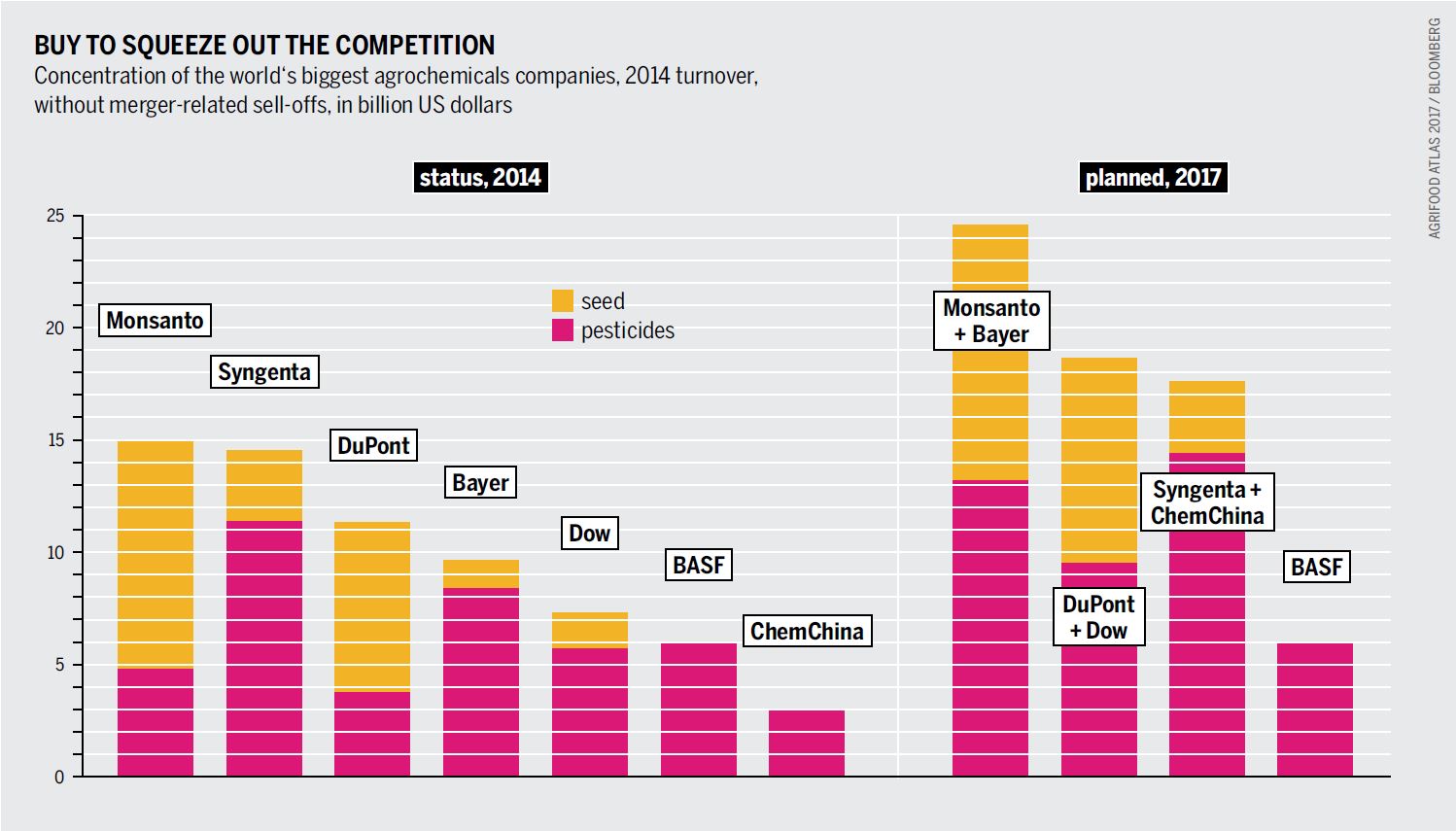
Limagrain claims to be the fourth largest seed producer in the world. Let’s put that into context. Limagrain reports overall sales of US $2.8 billion. This is about one tenth as large as Bayer/Monsanto which is the largest of the big three agro-chemical-seed companies with an estimated US$24.5 billion in sales. The smallest of the recently merged big three is Syngenta/ChemChina with estimated combined sales almost seven times greater than Limagrain.
Now, there is nothing wrong with a French farmer-owned cooperative operating a seed business and there is nothing stopping them from doing so. But there is something very wrong with Ottawa allowing any organization to profit by charging Canadians for seed developed from a genome already paid for by Canadians. It is even more offensive when the seed involved is the wheat genome that Canada’s Dominion Cerealist created over a century ago. That Canadian-made wheat genome is still the genetic basis for all temperate zone bread wheat cultivars.
Let’s remember that all the cereals and domestic plants we use were created or adapted to thrive in the Canadian climate through our public plant breeding system. So in terms of genetics, nobody has anything better than what we have now.
Is Limagrain only a seed company? Limagrain’s flagship wheat production system marketed elsewhere under the name CoAXium™ involves a wheat cultivar developed to be tolerant of one type of herbicide. Their promotional material even echo’s the promise from Monsanto that its herbicide tolerant (HT) canola would simplify farmers’ role to “seed, spray, harvest.” It should be noted that unlike Monsanto’s HT canola which was modified by inserting genetic material from another species, Limagrain’s HT wheat appears to use a non-transgenic (non-GMO) methodology.
On its web site Limagrain notes it is partnered with the Colorado Wheat Research Foundation Inc. and an herbicide manufacturer in the development and roll out of this HT wheat. How is this different from what we see now in canola development or in the giant integrated agro-chemical-seed companies?
In our public interest Canadian system this variety would have to meet our much higher milling wheat standards and it would also have to meet with customer acceptance in the milling, baking, and noodle industries around the world. Of course if those who want to harmonize our grain grading and registration standards to the much lower US levels get their way, Canada will be removed as the only producer of high quality cereals and the only potential supplier of non-herbicide tolerant wheat.
Some Seed Value Creation supporters also trot out the notion our plant breeding system is responsible for a decline in wheat acres over the years. The best response to this nonsense came from an astute Manitoba farmer in Winnipeg who observed that “there are more canola acres because there is more demand for canola.”
As another farmer observed “seed development is a conversation that should take place between farmers, the people of Canada, and their elected Government. No one else.” We do not need private companies pushing consultations to convince farmers and Canadians that they know better than those of us actually living and working here how to continue developing our food system.
Let’s also be clear: the Canadian seed genome includes more than just grains. Everything from flax, hemp, and vegetables, to fruits, ornamental plants like roses, and other plants that thrive in our northern climate are all on the table. Now is the time to bring this dialogue back to where it belongs – between farmers, Canadians, and our elected Government. It is time to get the conflicts of interest out of our Canadian food system.
An obvious part of this needs to be a reassessment of the gutting of the farmer-controlled Western Grains Research Foundation and the transferring of its responsibilities to the western Canadian wheat/barley commissions/associations by 2020. But that is a problem for another day.
There is nothing to stop farmers and those who like to eat from showing up at the last meeting in Edmonton – December 6, 2018 10:00 am to 4:00 pm at the Renaissance Edmonton Airport Hotel, 4236 – 36th St. People need to let the Federal bureaucrats know what they think of these ideas.
Food Genetics – Seed companies’ talking points
AGRIFOOD ATLAS 2017
(November 30, 2018) By now most grain farmers are aware that (by 2017) just three giant agro-chemical-seed companies dominate the global agrochemical and seed market. These giants are certainly interested in taking control of the Canadian cereals genome away from farmers and the public interest. Their friends and sympathisers are using a vehicle called “Seed Synergy” under the umbrella of “Seed Value Creation” to make this happen. They make various claims about how charging farmers royalties on the seed they grow will be a great thing.
I would just like to highlight some of the talking points Seed Synergy and their friends use to push this privatization agenda of imposing royalties and draconian regulations on grain farmers under various labels (Technology Use Agreements (TUAs), Seed Variety Use Agreements, End Point Royalties, Trailing Contracts and the like).
They seem to have several talking points.
To keep farmers docile, they say royalties/TUAs will only apply to new varieties where farmers’ right to save seed has been replaced with a mere privilege – BUT, they say, we will still have the right to save and grow obsolete varieties. Both statements may be true but are irrelevant. Is anybody still growing Betz barley? Of course not, smut and other fungi evolved to eat it.
As older varieties become vulnerable to evolving pests, evolution makes them obsolete, making the right to save and grow our own older varieties weak and fragile. To speed up farmer adoption of new royalty-friendly varieties, expect to jump through hoops to prove you’re really planting an older variety. The Seed Synergy database they want to set up to enforce the new royalty scheme will quickly identify where new varieties are not being grown and whose land is not returning royalties, making it easy for the PBR police to find you. So, in the near future with Seed Synergy/TUAs there will be no possibility of choice for grain farmers. With TUAs, evolution will gradually kill any choices we have to grow and save seed of any sort without paying some sort of annual royalty to the integrated agro-chemical-seed companies.
The contention farmers will always have the choice of saving and planting their own seed-grain is less than accurate.
I should also note that it takes around 12 years to develop a new variety. This means that in the short term this is just an excuse for the agro-chemical-seed companies to free load on the publically developed varieties already in the pipeline. Remember farmers and the Canadian public paid for the development of those varieties.
The second claim is that Royalties/TUAs will allow us to be “competitive on a world basis.” More nonsense. Our wheat and barley genetics are already the gold standard for quality and agronomic fitness to our climate. Giving control of choosing which varietal lines are “finished” and commercialized to companies operating on a multinational basis means our needs in prairie Canada will be watered down to a common global level. This is simply the logic of business lowering its overhead costs by using fewer specialized product lines to enhance their profits. Prairie Canada lives or dies on its ability to provide quality-assured grain that nobody else grows. Our climate helps, but publically developed genetics are the other magic ingredient.
Seed Synergy supporters also make much of the idea the government is cutting back on its support of public plant breeding. It is true the Harper clan did engage in an orgy of destruction just before they lost the last election. This can be easily fixed by restoring the public obligation to support impartially developed cereal grains which the Harper Conservatives cut back on.
Why pedigreed seed growers would think their own work is so unimportant that it does not demand continued government support for public plant breeding is a mystery, as is their willingness to surrender their independence and skills to work as agents of the big agro-chemical-seed companies.
Lastly, the issue of conflict of interest is simply not addressed. In an interview Ward Oatway (president of the Ab. Seed Growers) even trotted out midge resistant wheat as an example of how good this whole process could be. In fact, midge resistant wheat is a recent example of public plant breeding without the built-in conflicts of interest of Seed Synergy TUAs.
Another good example is “Rescue” the sawfly resistant wheat registered in 1946 and developed by our public system. At that time US farmers were reliant on the private seed companies and sprayed mega tonnes of DDT on their wheat to control sawflies while our wheat was sawfly resistant, so we did not need DDT.
How would companies like Bayer/Monsanto, which have major investments in agro-chemical factories deal with a similar insect resistant varietal line in a world of plant breeding effectively controlled by private companies? Actually, private companies have controlled canola breeding since the early 1980s. They have left a varietal line known as “hairy canola” that does not need insecticides sitting on the shelf for years. When compared with wheat, privately managed canola breeding has proven to be more expensive with poorer yield gains, but that is another problem. We Albertans seem to be blind to conflicts of interest.
In my over 40 years of grain farming I have purchased and planted seed every year from one of the local farms who raise pedigreed seed – my choice. Many of my neighbours save and replant their seed and only occasionally buy pedigreed seed – their choice. Our present system is already the best in the world for both farmers and the public. Under Seed Synergy/TUAs, we will all be compelled to purchase seed from one of the big agro-chemical-seed companies every year and pay royalties in one form or another to their shareholders – and that is no choice at all.
Next time look for a more detailed article on this subject.
Food Genetics – farmers created it all
(November 28, 2018) Editor’s Note: The Federal Government and representatives of the three giant agro-chemical-seed companies are working to take control of seed genetics away from prairie farmers and the Canadian public. The following compilation of two articles by my late friend and colleague Paul Beingessner about how grain and other food genetics are created by farmers is more pertinent than ever. This article is reproduced from our Public Plant Breeding page.
Shared knowledge and co-operation make progress possible
– Paul Beingessner
Cross breeding of plants to produce new varieties is a relatively recent science, little more than 100 years old. Improving plant varieties by selection, on the other hand, has been going on for about 10,000 years. All modern plant breeding, is built on that first 10,000 years during which farmers around the world created an astounding legacy.
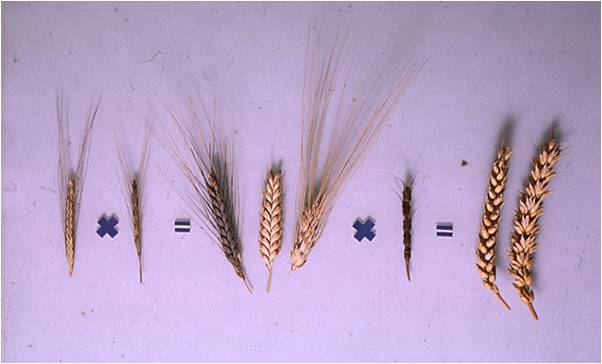
– wild wheat X wild goat grass = Emmer
– Emmer X wild goat grass = Bread wheat
And what did farmers do in those 300 generations? Well, they developed modern crops. By careful selection, they turned tiny seeds of grasses and small wild fruits into grains and vegetables and fruits, many of which we still grow and eat today. They developed hundreds of breeds of cattle, sheep, goats and other animals suited to the wide range of climates around the globe. And they did all this before the discovery of the science of genetics, which is just a bit over 100 years old.
One hundred years ago, no one owned plant varieties. Plant breeders around the world co-operated by sharing germplasm and passing on new discoveries. The creation of Marquis wheat, forerunner of nearly all bread wheats in western Canada, illustrates how plant breeders built on the legacy left by generations of farmers.
Marquis is a cross between Red Fife and Hard Red Calcutta. Red Fife was brought from Scotland, by a farmer who got the seeds from a Polish ship that carried wheat from the Ukraine. It was given to another Scottish farmer in Ontario, David Fife.
Hard Red Calcutta came from India, but it was a type of wheat rather than a single variety. Crossed with Red Fife and carefully selected for several generations, it yielded Marquis wheat. By 1918, Marquis was grown on more than 20 million acres, from northern Saskatchewan to southern Nebraska. James Boyle of the College of Agriculture at Cornell University said this about Marquis wheat: “The greatest single advance in wheat ever made was the introduction of that class of hard spring wheat known as Marquis wheat. The idea came free of charge from the Dominion of Canada’s Cerealist, Sir Charles E. Sanders (sic).”
The development of Marquis wheat is a story of co-operation. Co-operation, whether wittingly or not, between farmers of that day in Poland, the Ukraine, Scotland, India, Canada and the United States, and farmers from thousands of years before, whose careful work in selecting and preserving wheat seeds made all the other co-operation possible. This co-operation occurred because people recognized the importance of progress and development, and they knew it would only happen if people shared their knowledge.
For 300 generations, ten thousand years, farmers kept this knowledge and passed it on. And now, in our generation, the chain is being broken. Farmers are leaving the land in droves. Why? Because we gave up our control over that knowledge. As modern science evolved, we gave it to the universities. But they were publicly owned, and as they improved on that knowledge, they gave it back to us, freely.
Then, about 20 years ago, there was a dramatic shift. Governments decided that knowledge should no longer be free. They brought in plant breeders’ rights and patents on living things. Now, by adding one tiny jot to the information that came from 300 generations of farmers, private companies and even the universities themselves could own the knowledge built up over 10,000 years. And once they had it, they began to sell it back to us, to use, not to own. Now farmers are forbidden from saving their own seeds and giving them to their neighbours, as they did for millennia.
But we did all this for a reason, right? We did it because science and the privatization of knowledge were going to give us better crops, make us better off, and allow us to feed the expanding global population.
So we look for solutions. Ethanol, bio-diesel, WTO, hog barns, higher yielding crops, genetically modified plants and animals. Strangely, 400 million people still die of hunger each year, while a billion have inadequate diets. Farmers all over the globe are in trouble, fleeing to overcrowded cities and abandoning the practices of 300 generations.
The patenting of plants, far from encouraging innovation, as is the purpose of patents, is now used to stifle innovation. It allows companies to tie up germplasm for their exclusive use. While plant breeders’ rights do not now allow a breeder to restrict further work using his creation, patents do. Farmers must let their voices be heard.
© Paul Beingessner 2004 and 2006
Who will control the legacy of 300 generations of crop genetics?
The Canadian tradition has been to build on this legacy in the public interest. Farmers and the Canadian public have provided the funding for scientists working at public universities and Federal Government Agricultural Research stations to continue developing new varieties of wheat and other grains.
Next time look for a background on the latest attempt by the agricultural chemical industry to hijack control of the genetics of our daily bread and other foods.
Postal worker dedication critical to rural service
(November 23, 2018) When there is a labour disruption at the Post Office it brings home the fact this is an important service. Business and some of the media usually blame the Canadian Union of Postal Workers for being irresponsible with the implication postal workers’ concerns are frivolous. CUPW started a rotating strike trying to get Canada Post’s management to address their health and safety concerns.
We have not seen much disruption of the postal service here in my neck of the woods. I sent my grain samples away to the Canadian Grain Commission’s Harvest Sample Program after the strike started. So it was a happy surprise yesterday morning to open my email and receive my sample results from the federal employees at the Canadian Grain Commission, who also provide an important service to Canadian grain farmers. All of the grain samples from my harvest made it through the postal system just fine in spite of all the wailing about postal service disruptions. Incidentally because of the late fall and wet harvest, the CGC has extended the deadline for this very useful program to November 30 and have added some useful extras to the results. Click here to get into the Harvest Sample Program.
As a rural Albertan, I have a soft spot for postal workers and the Post Office in general, even when there are more bills than good news in the mail. We order our chicken and Christmas Turkey direct from a hatchery so the chicks come in a vented cardboard box via Canada Post, usually in the middle of a cold March day. Now the catch is our rural Alberta Post Office is served by a mail truck that arrives at about 3 AM from the sorting plant. Normally the mail is deposited into a large lock box next to the building.
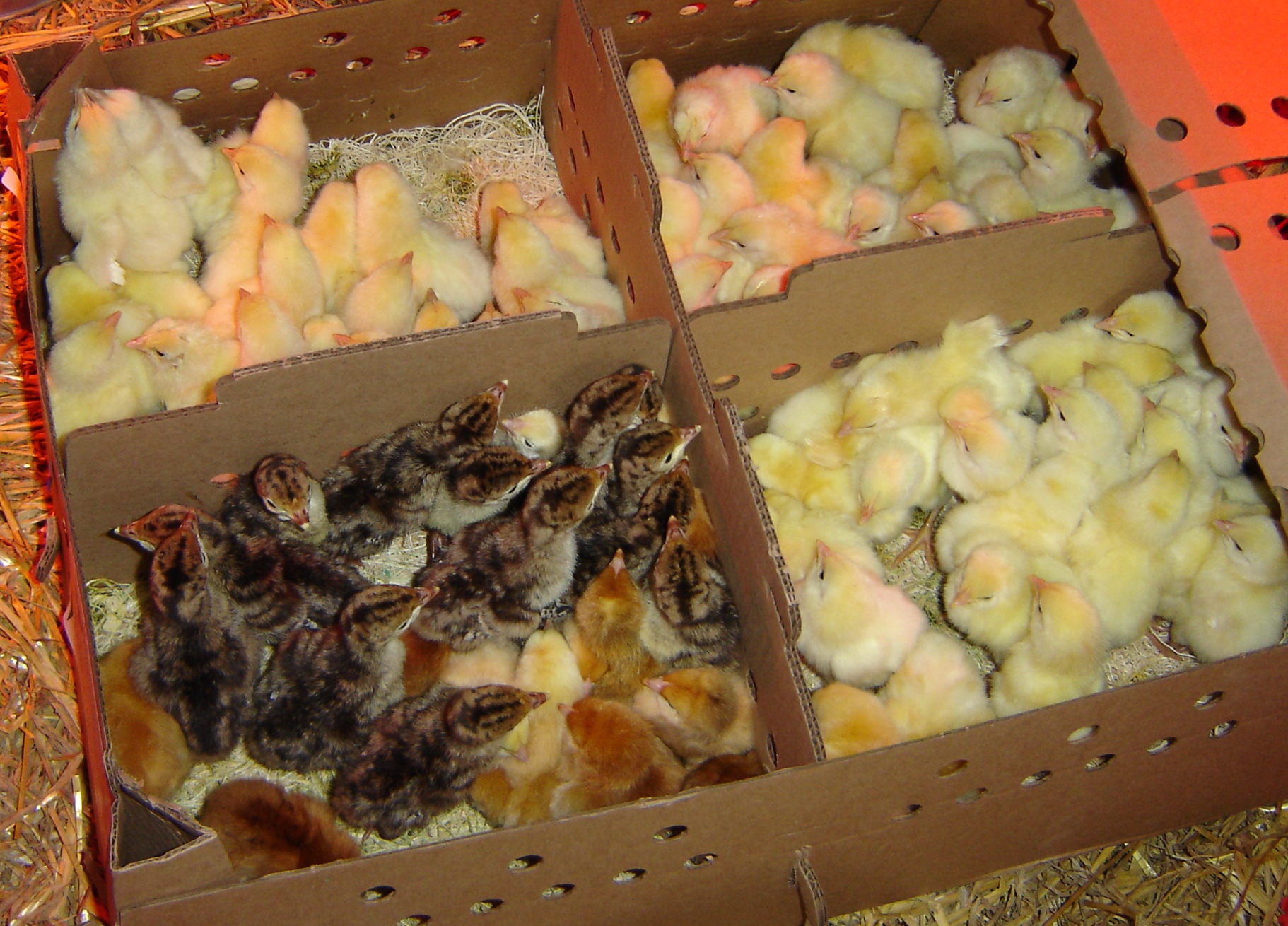
Baby chicks and turkeys by Post
A local store owner operates our rural Postal outlet. Somebody lets her know those delicate chicks are on their way. So at 3 AM our local Post Mistress walks down to her store to retrieve the chicks and move them into the warm building. She tells me the driver of the Postal Van always wraps the box in their own winter coat to keep the chicks warm and waits until she shows up. You can’t buy service or dedication like that.
The Canadian Union of Postal Workers has stated their members now have a higher rate of injury than any other employees in the federal sector. I’m told injuries started to increase after the much reviled community mail boxes were introduced in 2015 along with much longer routes. At that time the principle of equal pay for work of equal value was discarded for newly hired people and rural carriers creating a two-tier pay system. After a day of shoveling grain I can empathize with their concerns about workplace injuries in the face of a massive increase in parcel post deliveries.
And I also know that we all have a collective obligation to treat the people who provide services with respect and consideration whether they are a minimum wage food server or a postal worker. Since the numbers show postal worker injury rates are through the roof it is no surprise one of the Union’s concerns is work place safety. Regrettably the Federal Government has chosen to dismiss their concerns by tabling back to work legislation just as the Harper Government did.
Compared to the several books that came in yesterday’s mail or even the bunch of grain samples we sent off to the Canadian Grain Commission, our annual box of chicks does not weight much. However, with the rise in e-commerce, I cannot imagine what it must be like for Postal Workers facing a mountain of packages ordered on-line. But, it is not the workers’ job to anticipate the demands on the service. That responsibility lies with management and it does not look like they are coping well. Forcing the workers back to work is just kicking the problems down the line. Injuring and disabling workers is no way to make sure we continue having the excellent service I’m used to from my rural post office.
Video link